
As an Amazon Associate I earn from qualifying purchases. This post was written with AI assistance and reviewed for accuracy.
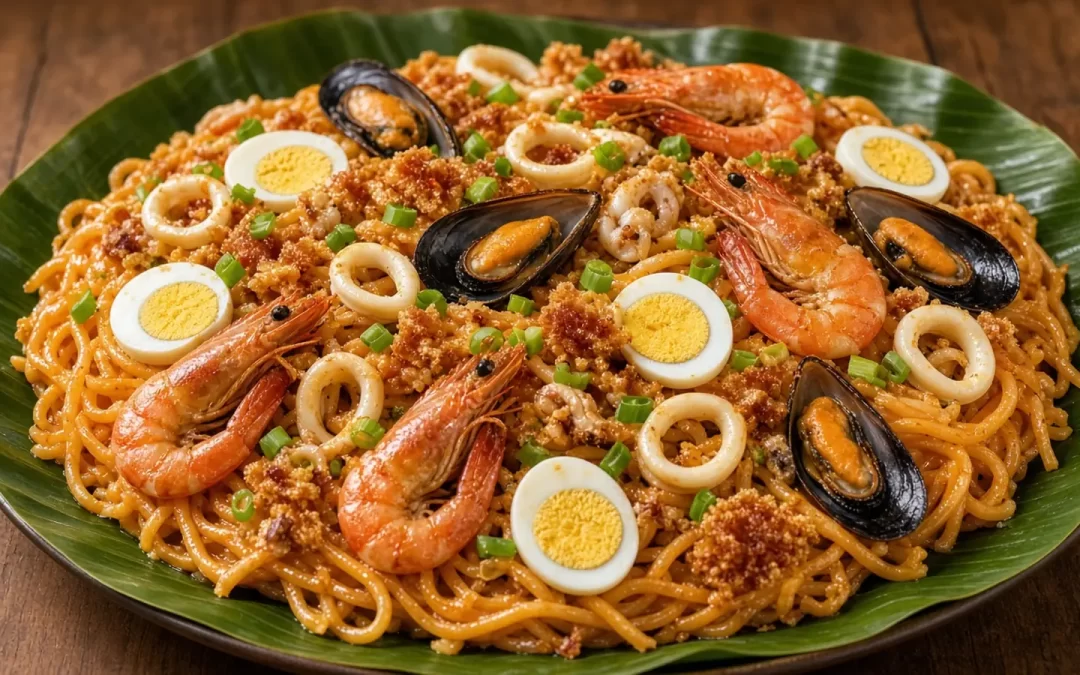
Some pancit is light and delicate. Pancit Malabon isn’t. Thick rice noodles tossed in a rich orange seafood sauce, then crowded with shrimp, squid, mussels or oysters, sliced eggs, crushed chicharron, and smoked fish flakes. Generous, a little messy, and exactly what a Filipino party tray should look like.
It takes its name from Malabon, a fishing town north of Manila known for seafood. Fresh catch from nearby waters ended up on the noodles, and the style traveled far beyond the town. This home version is written from traditional methods and common family adaptations, not a claimed product test. Adjust seafood and seasoning to what you can find.
Pancit Malabon vs. Palabok
They look similar, and both use an annatto-colored shrimp sauce, but a few things set them apart:
- Noodles: Malabon uses thick rice noodles, closer to spaghetti width or a bit thicker. Palabok uses thin rice noodles.
- Sauce method: In many Malabon recipes, noodles get tossed right in the sauce so every strand is coated. Palabok is usually sauced on top.
- Toppings: Malabon is known for more seafood, especially squid and shellfish.
Love palabok? Think of pancit Malabon as its heartier, seafood-heavy cousin.
Ingredients (Serves 8-10)
Noodles
- 1 lb (450 g) thick rice noodles (search pancit Malabon noodles or thick rice sticks)
Shrimp stock
- 1 lb (450 g) shell-on shrimp
- 5 cups water
Sauce
- 3 tablespoons neutral oil
- 1 medium onion, minced
- 6 cloves garlic, minced
- 1/4 lb (115 g) ground pork, optional
- 2 tablespoons annatto powder dissolved in 1/4 cup warm water
- 1 tablespoon shrimp paste (bagoong alamang)
- 3 tablespoons fish sauce (patis), plus more to taste
- 3-4 cups shrimp stock (from above)
- 2 tablespoons cornstarch mixed with 1/4 cup cold water
- 1 tablespoon oyster sauce, optional
- Black pepper
Seafood and toppings
- Reserved peeled shrimp
- 1/2 lb (225 g) squid, cleaned and sliced into rings
- 1/2 lb (225 g) mussels or shucked oysters, cleaned
- 4 hard-boiled eggs, sliced or quartered
- 1 cup crushed chicharron
- 1/2 cup tinapa (smoked fish) flakes or flaked smoked mackerel
- 1/2 cup fried garlic bits
- 1/2 cup chopped green onions
- 1 cup shredded cabbage, optional
- Calamansi or lime wedges
Amazon search links above help you find pantry staples. Availability changes, and we don’t list prices or ratings. A local Asian grocery is also a great source for thick rice noodles and tinapa.
Equipment
- Large pot for soaking and boiling noodles
- Large wok or deep skillet
- Small saucepan for seafood
- Large serving platter
Step-by-Step Method
1. Make the shrimp stock
Peel and devein the shrimp, setting the meat aside. Simmer heads and shells in 5 cups of water for 15-20 minutes, pressing the heads to extract flavor. Strain and keep the stock warm.
2. Cook the seafood
Poach peeled shrimp in a little stock for 1-2 minutes until pink. Remove. Add squid to the simmering stock for 30-60 seconds, just until opaque, then pull it right away so it stays tender. Steam or simmer mussels until they open; discard any that stay closed. Using oysters? Poach briefly until the edges curl. Set all seafood aside.
3. Soak the noodles
Thick rice noodles need more time than thin ones. Soak in cold water 30-60 minutes, or follow the package, until pliable. Boil in batches about 3-5 minutes until tender but still slightly chewy. Drain well and toss with a little oil.
4. Make the sauce
In a wok or deep skillet, heat oil over medium heat. Sauté onion until soft, then add garlic until fragrant. Add ground pork if using and cook until browned. Stir in bagoong and cook a minute to bloom the flavor.
Add the dissolved annatto, then pour in 3 cups of shrimp stock. Season with fish sauce, oyster sauce if using, and pepper. Simmer 5 minutes.
5. Thicken and toss
Stir the cornstarch slurry and add it gradually while stirring until the sauce lightly thickens. Malabon sauce should be thinner than palabok sauce so it coats noodles without clumping.
Add cooked noodles to the wok. Toss gently with tongs until every strand is coated in orange sauce. Looking dry? Add more stock a splash at a time. Add shredded cabbage now if using, and toss another minute.
6. Top and serve
Transfer to a large platter. Arrange shrimp, squid, and mussels or oysters on top. Add sliced eggs, tinapa flakes, crushed chicharron, fried garlic, and green onions. Serve right away with calamansi wedges.
Tips for the Best Pancit Malabon
Don’t overcook the squid. Squid turns rubbery if it sits too long. A quick dip in simmering stock is enough.
Choose the right noodles. Look for thick rice noodles labeled for pancit Malabon or thick rice sticks. Thin bihon turns mushy under this heavier sauce.
Balance salt carefully. Bagoong, fish sauce, tinapa, and chicharron all bring salt. Season gradually and taste at the end.
Keep toppings separate until serving. Chicharron loses crunch fast once it hits the sauce. For a party, add it at the last minute or set a bowl on the side.
Seafood swaps. Use what you can find. Shrimp alone works, and frozen seafood mixes are practical. Thaw fully and pat dry.
Make-ahead. Prep stock, seafood, toppings, and sauce a few hours ahead. Cook and toss noodles close to serving for the best texture.
Serving Notes
Pancit Malabon is a centerpiece for birthdays, fiestas, Christmas, and New Year’s Eve. Serve it with lumpia shanghai, fried chicken, or barbecue skewers, and round out the table with puto, kutsinta, or cold Filipino fruit salad.
Leftovers keep in the fridge 1-2 days. Because it has seafood, cool and refrigerate promptly. Reheat in a pan with a splash of stock or water. Refresh with new chicharron and green onions before serving.
When you photograph your pancit later, export images as WebP before adding them to the site.
FAQ
Where does pancit Malabon come from?
It’s named after Malabon, a city in Metro Manila with a long history as a fishing community. Local seafood shaped the dish.
Can I use spaghetti instead of thick rice noodles?
Not traditional, but in a pinch it gives similar thickness. Texture will differ, and you may need more sauce.
Do I need annatto?
Annatto gives the classic orange color and a mild earthy flavor. Paprika is a common color sub, but it tastes different.
Can I make it without shellfish?
Yes. Use shrimp only, or swap in fried tofu and smoked fish. Keep in mind the sauce is shrimp-based, so it isn’t suitable for people with shellfish allergies.
Why are my noodles mushy?
Likely over-soaked or overcooked. Boil just until tender with a slight chew and toss them in the sauce quickly.
Closing
Pancit Malabon is party food at its most generous: thick noodles, rich seafood sauce, toppings piled high. It takes a little more prep than everyday pancit, but most steps can be done ahead, and the result looks like a celebration on a platter. Make a big batch, call the family, and let the long-life noodles do their job.
Want a lighter noodle on the same table? Try our pancit palabok recipe, and save room for Filipino fruit salad.