
As an Amazon Associate I earn from qualifying purchases. This post was written with AI assistance and reviewed for accuracy.
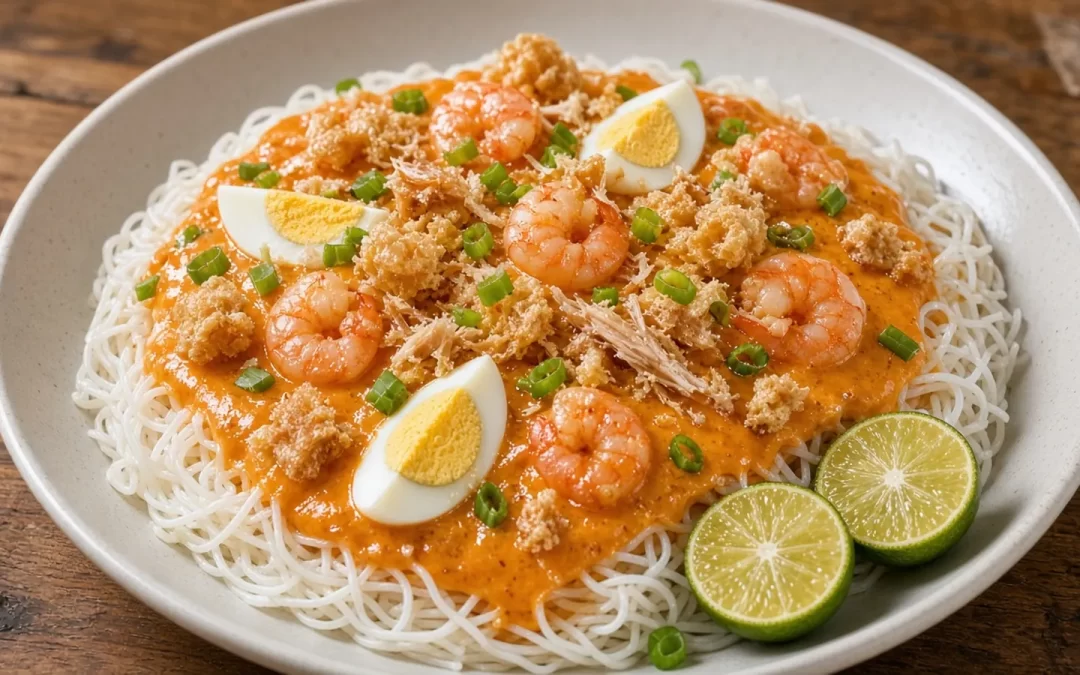
Walk into almost any Filipino birthday party and you’ll find a tray of pancit. Noodles stand for long life, so celebrations feel incomplete without them. Among pancit styles, pancit palabok might be the most eye-catching: thin rice noodles under bright orange shrimp sauce, piled with crushed chicharron, sliced eggs, shrimp, smoked fish flakes, green onions, and a squeeze of calamansi.
This pancit palabok recipe is for home cooks feeding a crowd. The sauce starts from shrimp stock, so it tastes deeper than a packet mix, but it still fits a regular stove. It is based on traditional methods and common home adaptations rather than a claimed product test. Season to your family’s taste.
What Is Pancit Palabok?
Palabok is a Filipino noodle dish: thin rice noodles, thick savory shrimp sauce colored with annatto (achuete). Toppings make it special: crunchy pork cracklings, hard-boiled eggs, shrimp, tinapa (smoked fish) flakes, fried garlic, and green onions.
You may also hear of pancit luglug, a close relative with slightly thicker noodles, and pancit Malabon, with thick noodles and heavier seafood. Palabok is the lighter, more delicate version. It’s popular for parties because you can prep noodles and sauce separately and assemble just before serving.
Ingredients (Serves 8-10)
Noodles
- 1 lb (about 450 g) thin rice noodles for palabok (often labeled bihon or rice sticks; thin to medium thickness)
Shrimp stock
- 1 lb (450 g) shell-on shrimp
- 6 cups water
- 1 teaspoon salt
Palabok sauce
- 3 tablespoons neutral oil
- 1 medium onion, minced
- 6 cloves garlic, minced
- 1/2 lb (225 g) ground pork
- 2 tablespoons annatto powder, dissolved in 1/4 cup warm water (or 3 tablespoons annatto seeds soaked and strained)
- 4-5 cups shrimp stock (from above)
- 2 tablespoons fish sauce (patis), plus more to taste
- 1 tablespoon shrimp paste (bagoong alamang), optional but traditional for depth
- 1 cube shrimp or pork bouillon, optional
- 1/2 cup all-purpose flour or 1/3 cup cornstarch, mixed into 1 cup cold water
- Freshly ground black pepper
Toppings
- Reserved peeled shrimp from the stock
- 4-5 hard-boiled eggs, sliced
- 1 1/2 cups crushed chicharron (pork rinds)
- 1/2 cup tinapa (smoked fish) flakes, or flaked smoked mackerel
- 1/2 cup fried garlic bits
- 4 stalks green onions, chopped
- 1/2 lb fried tofu, cubed, optional
- Calamansi or lime wedges for serving
Amazon search links above help you find pantry staples. Availability changes, and we don’t list prices or ratings. Asian groceries usually carry palabok noodles, annatto, and tinapa.
Equipment
- Large stockpot for boiling noodles
- Medium saucepan or wok for the sauce
- Strainer
- Large serving tray or bilao lined with banana leaves (optional)
Step-by-Step Method
1. Make the shrimp stock
Peel the shrimp and set the meat aside. Put heads and shells in a pot with 6 cups of water and the salt. Bring to a boil, then simmer 15-20 minutes. For richer stock, press the heads with the back of a spoon. Strain and discard the shells.
Poach the peeled shrimp in a little hot stock for 1-2 minutes, just until pink. Remove and set aside for topping.
2. Soak and cook the noodles
Soak the rice noodles in cold water about 15-20 minutes, or per the package. Bring a large pot of water to a boil. Cook the softened noodles in batches 1-2 minutes, just until tender. Drain, rinse briefly, and drain again well. Toss with a teaspoon of oil so they don’t stick.
Many families put noodles in a strainer and dip them in boiling water just before serving so they stay warm. Don’t overcook. Palabok noodles should be soft but still hold their shape.
3. Start the sauce
Heat oil in a saucepan over medium heat. Sauté the onion until soft, then add garlic and cook until fragrant but not brown. Add ground pork and cook, breaking it up, until no longer pink.
4. Build the flavor
Stir in the dissolved annatto. Add bagoong if using, and cook a minute. Pour in 4 cups of shrimp stock and bring to a simmer. Season with fish sauce, the bouillon cube if using, and black pepper.
5. Thicken the sauce
Whisk the flour or cornstarch slurry once more, then pour it slowly into the simmering sauce while stirring. Keep stirring 3-5 minutes until the sauce is thick, smooth, and coats the back of a spoon. Too thick? Add more stock. Taste and adjust with more fish sauce.
The sauce should be bright orange and glossy: pourable, but thick enough to cling to noodles.
6. Assemble
Arrange warm noodles on a large tray or individual plates. Ladle hot sauce generously over them. Top with crushed chicharron, sliced eggs, poached shrimp, tinapa flakes, fried tofu, fried garlic, and green onions. Serve with calamansi or lime wedges.
Tips for Better Palabok
Use real shrimp stock. Shrimp heads carry most of the flavor. If yours came headless, freeze shells from several meals and build a better stock later.
Annatto for color, not flavor. Annatto gives palabok its signature orange with a mild, earthy note. Can’t find it? A little paprika gets you a similar look, but the flavor changes.
Smooth sauce, no lumps. Always mix flour or cornstarch with cold water first. Add it slowly and stir constantly.
Crunch at the last minute. Add chicharron right before serving. Sit on the sauce too long and it goes soggy.
Make it party friendly. Keep noodles, sauce, and toppings separate until serving. Guests build their own plates, and nothing turns mushy.
Scaling up. For a large tray, double everything. Sauce reheats well, so make it a few hours ahead and rewarm gently with a splash of stock.
Serving Notes
Pancit palabok fits birthdays, Christmas, New Year’s, and potlucks. It goes well with lumpia shanghai, barbecue skewers, and puto. For dessert, cold Filipino fruit salad or leche flan is a refreshing finish.
Leftover noodles and sauce keep separately in the fridge up to 2 days. Reheat sauce in a pan with a little water or stock. Refresh noodles in hot water. Add new toppings before serving.
When you photograph your palabok later, export images as WebP before adding them to the site.
FAQ
What is the difference between palabok and pancit Malabon?
Palabok uses thin rice noodles and lighter toppings. Pancit Malabon uses thick rice noodles and usually loads up more seafood like squid, mussels, and oysters.
Can I use a palabok mix?
Yes. Packet mixes are convenient and common. Make the mix taste fresher by using shrimp stock instead of water and adding sautéed garlic, onion, and ground pork.
Can I make palabok without pork?
Yes. Skip ground pork and chicharron, use more shrimp and tofu, and top with fried garlic and toasted breadcrumbs or crushed crackers for crunch.
Why is my sauce bland?
It usually needs more salt from fish sauce, more shrimp flavor, or a little bagoong. Taste and adjust in small amounts.
Can I make it ahead for a party?
Yes. Make the sauce and prep toppings a few hours ahead. Cook or rewarm noodles close to serving and assemble at the last minute.
Closing
This pancit palabok recipe brings a Filipino party favorite into your kitchen. Rich shrimp sauce, soft noodles, a mountain of toppings. Festive, comforting, made for sharing. Set out a big tray, squeeze on the calamansi, and wish everyone a long life.
Want more party noodles? Try our thick seafood pancit Malabon next, and round out the table with Filipino fruit salad for dessert.