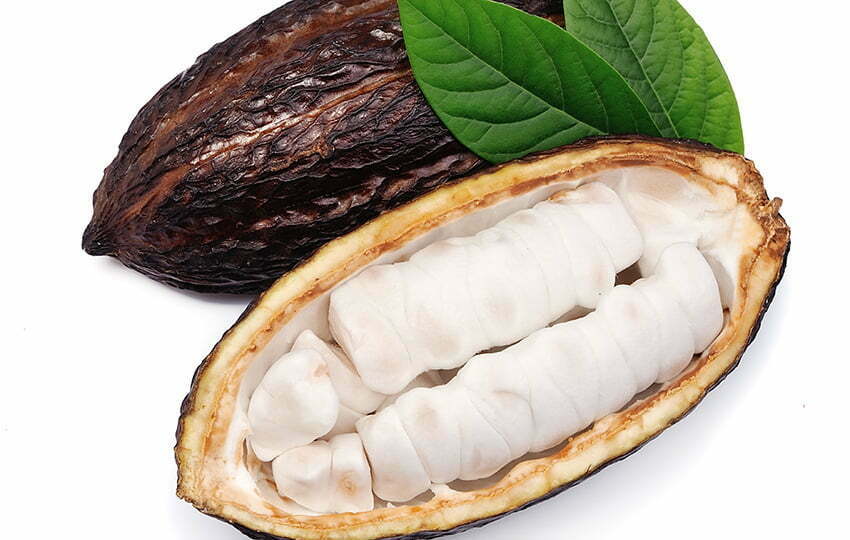
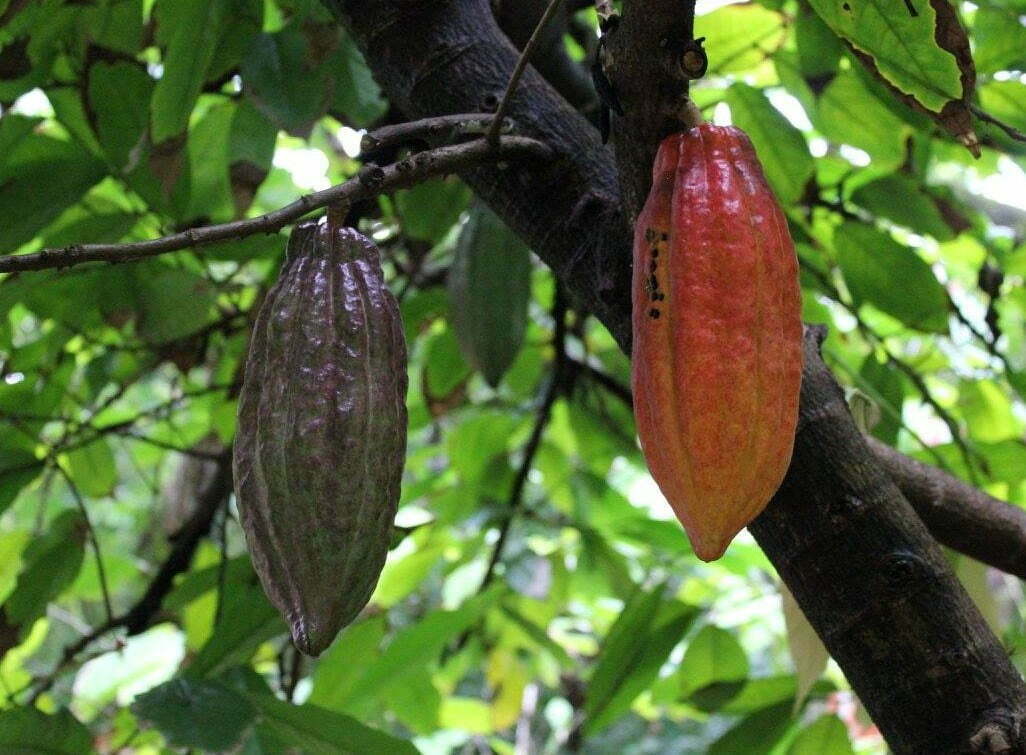
The Cacao fruit, the source of all things chocolate, presents itself in the form of pods akin to the shape of a football. With a tough exterior that necessitates using a sharp instrument such as a machete for opening, these pods house the cacao beans – the very foundation of our beloved chocolate. Every Cacao pod sprouts directly from the tree trunks or branches in a single formation, encasing approximately 30-40 beans. Each of these Cacao beans is encrusted with a cottony, edible white pulp that is sweet to the palate when consumed fresh.
As the Cocoa pods mature, they display a kaleidoscope of colors, transitioning from deep green to rich red and even purple. This spectrum of colors finally settles on a light-yellow to yellow-orange hue when the pods are ripe and ready for harvest. These ripe beans are then meticulously gathered, fermented, dried, and processed to extract the coveted chocolate substance. The journey of the Cocoa beans doesn’t end there, as they are then commercially shipped worldwide to contribute to a variety of chocolate-based culinary delights.
Cacao, more than just a source of delicious chocolate, also plays a significant role in local economies and cultural practices. In many regions, Cacao cultivation is a critical income source for farming communities. For these people, every stage of the Cacao bean’s life, from its initial sprouting within the Cacao pod to its final transformation into a delicious chocolate product, is an essential part of their livelihood.
Furthermore, Cacao has deep cultural significance in many societies. For instance, Cacao beans were historically used as a currency in some parts of Central and South America. Today, the Cacao tree is often grown for its ornamental value, and making chocolate from Cacao beans is a cherished tradition. Thus, with its luscious pods and valuable beans, Cacao is more than just a plant – it is a symbol of practice, a source of livelihood, and the origin of one of the world’s most loved treats, chocolate.