

We have introduced our Pansit Bato recipes from Janis and Mark, but Ludwig shares his own Pansit Bato Guisado recipe, as well. It obviously tells you how popular this type of Filipino chow mien noodle is. With Ludwig’s version of his Pansit Bato Guisado, he used cabbage for his vegetable ingredient and pork belly for the meat. Red onions, garlic, soy sauce, then salt and peppers for the spices. He made it with a fair amount of sauce and the outcome is truly delicious!
Ingredients: 4-6 servings
1 lb. pansit bato noodles
1/2 lb. pork pork belly cut in cubes
2 cups of thinly sliced cabbage
1 red onion, minced
2 cloves of garlic minced
1 tbsp. salt
2 tbsp. crushed black peppers
3 tbsp. of soy sauce
2 tbsp. of cooking oil
5 cups of water
Cooking Procedure:
- Clean and cut pork belly in small cubes, then set aside. Process all other ingredients accordingly. Immerse pansit bato noodles into warm water for 10-15 minutes until slightly softened.
- Sautee a garlic and onion in hot cooking oil, on a large pan. Add the pork belly cubes, apply a small amount of water if desired. stir meat to combine with garlic and onions until golden brown.
- Add all other ingredients except the cabbage. Apply up to 5 cups of water, leave if to boil for at least 10 minutes, then add the pansit bato noodles.
- Stir to combine, then let it simmer for 5 minutes and before adding sliced cabbage. Let the cabbage incorporate with the rest of ingredients without overcooking. Serve This great-tasting, Bicol’s pride, Pansit Bato Guisado recipe, hot!
Note: Filipino noodles or Pansit recipes are most often served with lumpia(eggrolls) as a combo meal. If you prefer it as your snack, puto(steamed rice cake) or sinapot(maruya) on the side, and spicy vinegar and fish sauce will truly perk you appetite. Adding “Dinuguan” to Pansit Bato is also a great idea.
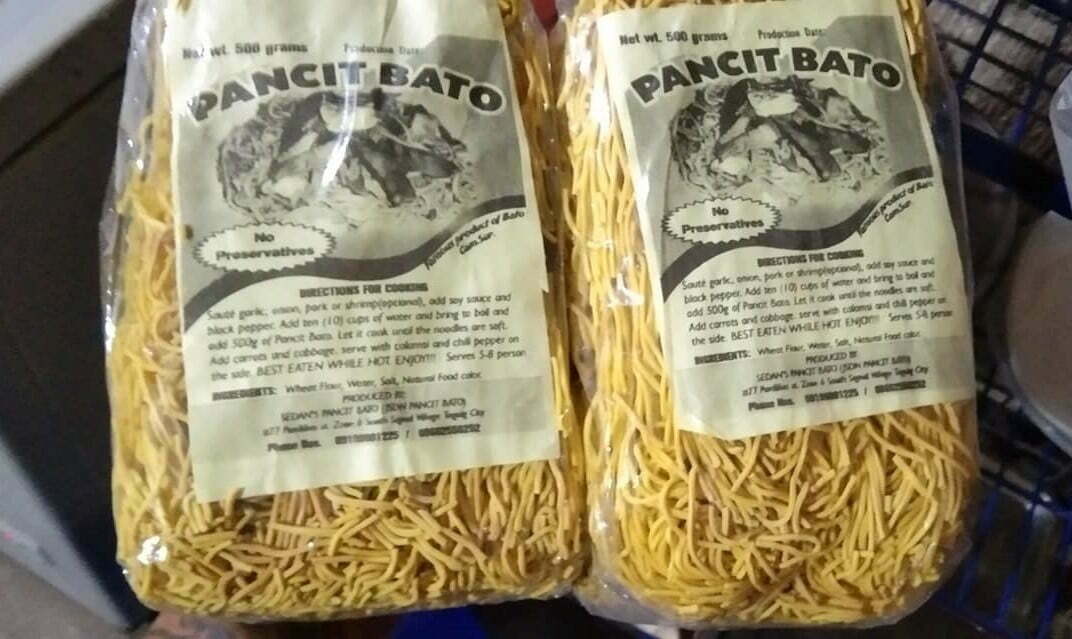
Authentic Bicol Pancit Bato Noodles
